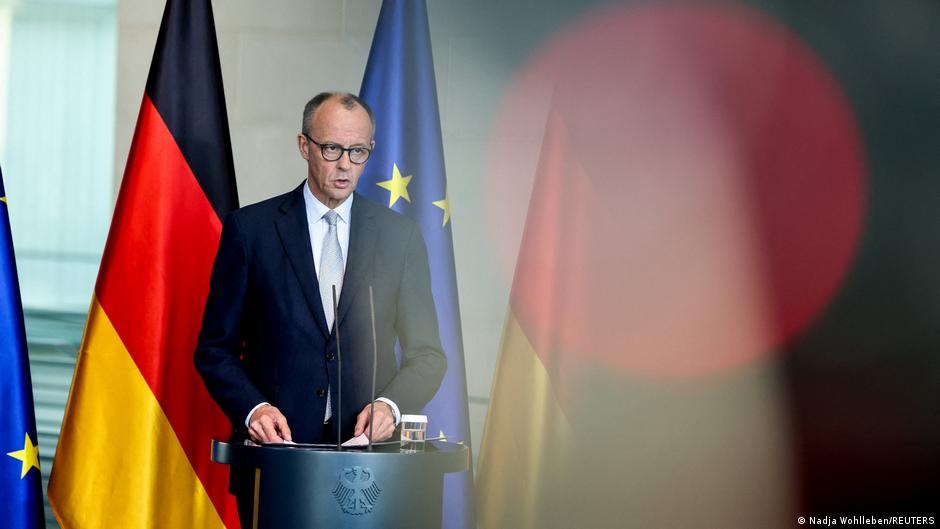
Germany's Firm Stance: Johann Wadephul Urges Iran to Reconsider Regional Policies
In a period marked by escalating geopolitical tensions, a prominent voice from Germany, Johann Wadephul, has underlined Europe's profound concerns regarding Iran's extensive regional influence. Speaking on behalf of Germany's foreign policy objectives, Wadephul has explicitly called upon Tehran to curtail its support for various non-state actors operating across the Middle East. This urgent appeal highlights the international community's growing apprehension about the destabilizing impact of such backing on regional peace and security.
The core of Germany's message, echoed by other European partners, is a direct challenge to Iran's current regional posture. Specifically, Wadephul's statements zero in on Iran's alleged ties and material support for groups such as Hamas, Hezbollah, and the Houthis. These organizations, active in different conflict zones—from Palestine and Lebanon to Yemen—are widely perceived as contributing significantly to the volatile security landscape of the Middle East. Germany, as a key European power, is particularly sensitive to these dynamics, understanding that regional instability can have far-reaching consequences, including humanitarian crises, increased migration flows, and threats to international trade routes. The focus on Wadephul on Iran & German Troops: Defensive Stance in Region further underscores the gravity of Germany's perspective on maintaining stability and the need for all regional actors to adhere to international norms.
Germany's diplomatic efforts, articulated by figures like Wadephul, are not isolated. They are part of a broader European strategy aimed at de-escalating tensions and fostering dialogue in a region often characterized by complex, interconnected conflicts. This approach is rooted in the belief that sustainable peace cannot be achieved without addressing the underlying factors that fuel these conflicts, including external support for non-state actors. The dialogue around wadephul iran interactions extends beyond mere criticism; it's an invitation for a recalibration of strategies that ultimately serves the interests of regional stability and global security.
The E3 Perspective: Diplomacy and Deterrence in the Middle East
The German stance, championed by Johann Wadephul, is frequently framed within the context of the E3—a diplomatic grouping comprising France, Germany, and the United Kingdom. This trilateral platform often coordinates European foreign policy responses to significant international challenges, with Iran's regional activities being a persistent area of concern. A joint E3 statement, as referenced, has underscored the shared European commitment to regional stability and the need for Iran to engage constructively rather than provocatively.
One critical aspect highlighted by Wadephul and the E3 is the role of diplomatic talks, including the often-discussed US-Iran negotiations. While the specific content of such talks may vary, the consensus among European powers is that dialogue, even indirect, is crucial for de-escalating tensions and finding pathways to peaceful resolutions. The E3's engagement signifies a preference for multilateral diplomacy, stressing that collective international pressure and engagement are more likely to yield results than unilateral actions. This collaborative spirit aims to leverage Europe's collective diplomatic weight to influence Iran's strategic calculations.
Europe's investment in Middle Eastern stability is multifaceted. Beyond immediate security concerns, there are significant economic interests, energy security considerations, and a humanitarian imperative to prevent further suffering. Germany, in particular, with its strong economic ties and commitment to human rights, sees a direct link between regional peace and its own national interests. Therefore, the call for Iran to curb its regional support is not merely a political statement but a strategic imperative rooted in a comprehensive understanding of the region's interconnectedness with global affairs. For a deeper dive into the collaborative efforts of European powers, consult the related article on Johann Wadephul's E3 Stance on Iran's Regional Influence.
The Significance of "Defensive Action" in Joint Statements
The mention of "defensive action" in joint E3 statements, as clarified by Wadephul, carries particular weight. It reflects a nuanced approach to military presence and engagement in volatile regions. Wadephul explicitly stated that such phrasing unequivocally means that German troops stationed in the region are authorized to defend themselves if attacked, rather than implying any offensive military posture or intention to engage in direct conflict. This distinction is vital for clarifying Germany's role and commitment to peace while ensuring the safety of its personnel.
German Military Presence: A Strictly Defensive Mandate
Germany maintains a military presence in various Middle Eastern countries, playing a role in international stabilization efforts, training missions, and humanitarian aid. Wadephul’s clarification regarding the wadephul iran context is directly linked to the operational mandate of these forces. German troops are currently stationed in strategic locations such as Jordan, Iraq, and Lebanon. Their missions are diverse, ranging from contributing to anti-ISIS coalition efforts in Iraq to supporting UN peacekeeping operations in Lebanon (UNIFIL) and participating in international training initiatives in Jordan.
The emphasis on "defensive action" is a cornerstone of Germany's military doctrine in these regions. It means that while German forces are present to support stability and security, their engagement is strictly limited to self-defense and the protection of personnel and assets. This mandate explicitly rules out participation in offensive operations or interventions that could be perceived as escalatory. Wadephul's statement serves to reassure both regional partners and international observers that Germany's military presence is not a precursor to broader military involvement but a commitment to safeguarding its forces while contributing to peace. This defensive posture is a critical element of Germany's broader foreign policy, aiming to contribute to stability without exacerbating existing tensions. Understanding the precise nature of this mandate is crucial for interpreting Germany’s position on regional security.
Strategic Implications of a Defensive Posture
This defensive stance carries significant strategic implications. Firstly, it builds trust with host nations, demonstrating that Germany's presence is cooperative and non-threatening. Secondly, it differentiates Germany from other international actors who might adopt more interventionist policies, allowing Berlin to maintain a more neutral and diplomatic standing in complex conflicts. Lastly, it reflects Germany's post-war foreign policy principles, which prioritize diplomacy and de-escalation over military confrontation, even when facing significant regional challenges concerning entities like Iran.
The Broader Implications: Navigating a Complex Geopolitical Landscape
The calls by Wadephul and Germany for Iran to curb its regional support are set against a backdrop of incredibly complex geopolitical dynamics. The Middle East is a mosaic of historical grievances, sectarian divisions, and competing geopolitical interests, making any attempt at de-escalation a formidable challenge. Iran's actions, perceived by many as an expansion of its influence through proxies, introduce a layer of unpredictability and risk to an already fragile ecosystem. Germany, through voices like Wadephul, aims to inject a sense of responsibility and foresight into these discussions, urging all parties to consider the broader ramifications of their actions.
The potential impact of Iran's regional activities extends far beyond the immediate battlegrounds. It affects global energy markets, contributes to refugee crises that reverberate across continents, and complicates international counter-terrorism efforts. Germany's plea is therefore not just a regional concern but a global one, recognizing that stability in the Middle East is intrinsically linked to global peace and prosperity. The international community faces the dual challenge of addressing Iran's legitimate security concerns while simultaneously holding it accountable for actions that undermine regional sovereignty and stability. This intricate balance requires sustained diplomatic pressure, robust intelligence, and a unified international front.
Practical Approaches to Regional De-escalation
- Sustained Diplomatic Channels: Maintaining open lines of communication, even with adversaries, is paramount. Germany often advocates for robust dialogue platforms, whether direct or indirect, to prevent misunderstandings and explore common ground.
- Targeted Sanctions and Incentives: A carefully calibrated mix of sanctions targeting specific entities responsible for destabilizing activities, coupled with incentives for constructive engagement, can encourage a shift in behavior.
- Capacity Building for Regional Partners: Supporting the security and governance capabilities of states in the region can empower them to manage internal and external threats more effectively, reducing reliance on external non-state actors.
- Humanitarian Focus: Addressing the humanitarian consequences of conflicts, such as providing aid to displaced populations, can alleviate suffering and remove potential breeding grounds for extremism.
Conclusion
Johann Wadephul's urgent call for Iran to curb its regional support for groups like Hamas, Hezbollah, and the Houthis represents a significant facet of Germany's foreign policy and its commitment to Middle Eastern stability. Framed within the broader E3 efforts and underpinned by a strictly defensive military posture in the region, Germany's message is one of diplomatic engagement tempered with clear expectations for responsible state behavior. The ongoing dialogue surrounding wadephul iran dynamics underscores Europe's vested interest in a peaceful and secure Middle East, recognizing that the region's challenges have global ramifications. By advocating for dialogue, upholding a defensive military stance, and emphasizing the importance of international cooperation, Germany, through prominent voices like Wadephul, continues to play a crucial role in navigating the complex geopolitical landscape and fostering a pathway towards de-escalation and long-term peace.